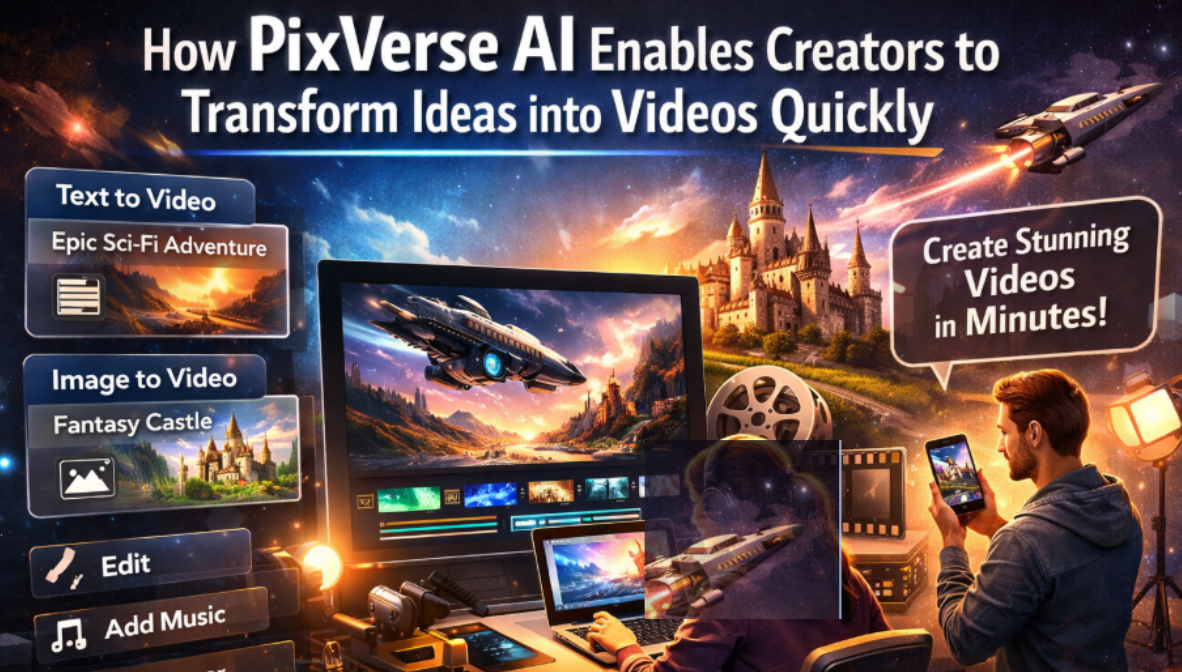
In the modern creator economy, ideas are the most valuable currency. But turning them into visually stunning and emotionally engaging videos has traditionally required time, skill, and access to complex tools. Today, artificial intelligence is changing that landscape. Through a new generation of creative assistants built around AI, video production has become faster, smarter, and more intuitive than ever before.
Emerging technologies are reshaping how creators, marketers, and businesses conceptualize and execute visual storytelling. This transformation isn’t just about automation—it’s about creative acceleration. With advanced AI-driven video platforms, creators can now focus more on the narrative and less on the technical hurdles that once stood in their way.
The Changing Landscape of Video Creation
For years, traditional video editing tools demanded both artistic vision and technical mastery. Crafting a quality video involved scripting, filming, editing, color grading, and post-production—a process often consuming countless hours. The need for specialized equipment and software licenses further complicated things, making content creation an expensive endeavor.
AI innovation has rewritten this narrative. Deep learning models now understand context, tone, and visual dynamics. These models can analyze a text prompt or an idea and instantly translate it into a storyboard or even a finished video. The time once spent splicing footage and rendering scenes is now replaced with real-time AI assistance that intelligently fills creative gaps.
The democratization of video creation means anyone—from solo entrepreneurs to educators—can now express ideas through moving visuals without being limited by technical skill or budget.
How AI Simplifies the Creative Workflow
AI video creation platforms use a mix of natural language processing, generative art, and adaptive editing tools to interpret commands and produce coherent video sequences. A user can simply type a scene description, and the tool will automatically generate visuals, voiceovers, transitions, and background music that align with the input’s mood and theme.
What truly sets these platforms apart is their capability to think creatively alongside the user. Instead of following rigid templates, modern AI engines respond dynamically to input, making each output unique. The process mimics working with a professional production crew—except it’s faster and accessible from anywhere.
Creators can experiment freely, iterate ideas rapidly, and produce multiple aesthetic variations of the same concept. This flexibility opens the door to storytelling at scale. Whether for brand campaigns, educational content, entertainment reels, or social media storytelling, the integration of AI makes production seamless and exciting.
The Power of Integration: AI Meets Video Platforms
The real magic happens when AI tools integrate with established video editing platforms. Such integrations bridge creativity and functionality, allowing creators to refine AI-generated content further. One of the most impressive collaborations in this domain is the integration of PixVerse with invideo—an established name in video editing and content creation.
By merging PixVerse’s intelligent creation engine with invideo’s versatile editing suite, creators now have an end-to-end solution for turning text-based prompts into polished, professional-quality videos. The pixverse ai video generator works seamlessly within invideo’s architecture, combining automated storytelling with manual control. This synergy delivers unprecedented creative freedom—AI handles the heavy lifting, while human creators refine the details.
This integration reflects the future of creative software—tools that don’t just automate but collaborate. AI becomes a true co-creator, augmenting human intuition rather than replacing it.
From Concepts to Screen in Minutes
Speed has become the primary differentiator in the digital age. Attention spans are short, competition is fierce, and the need to produce meaningful content quickly has never been greater. AI video tools provide exactly that edge.
Instead of waiting for long render times or struggling with complex storyboarding, a creator can input an idea—such as “a sunrise over futuristic cityscapes with an inspiring tone”—and see it materialize in minutes. The AI understands visual language deeply enough to construct motion sequences, lighting, and pacing that suit the tone.
This efficiency reduces creative bottlenecks and allows teams to focus on ideation, storytelling, and engagement strategy. Businesses can adapt quicker to trends, educators can design engaging lesson content overnight, and influencers can refresh their visual style with ease.
Creative Freedom and Customization
Despite their speed, AI video tools are not restrictive. They give control back to creators through robust customization features. After a base video is generated, users can fine-tune everything—from visual aesthetics and transitions to soundtrack and narrative pacing.
The result is a perfect blend of automation and personalization. AI provides an intelligent foundation, while human touch ensures authenticity and emotional depth. This hybrid workflow highlights how humans and machines can complement each other’s strengths—precision meets imagination.
Such systems also encourage experimentation. Since creating variations costs neither time nor resources, creators can explore multiple directions before finalizing a style or story. The spontaneous process often leads to fresh and unexpected results—something traditional methods rarely allowed.
Accessibility and Affordability
In today’s global creative economy, accessibility is essential. Many individuals and small businesses lack the resources to invest in high-end equipment or professional editing services. That’s where the rise of platforms offering a free ai video app experience makes a significant difference.
By lowering entry barriers, AI platforms allow anyone with an internet connection to become a storyteller. The movement has democratized creativity to a level unimaginable even five years ago. Students, marketers, and indie creators can produce cinematic content on par with professional studios. Meanwhile, larger organizations benefit from scalability and consistent branding across campaigns.
The affordability of such AI-powered solutions ensures that quality video creation no longer remains a privilege—it’s a standard expectation.
The Broader Impact: Redefining Creativity
The implications of AI-driven video tools go far beyond faster production cycles. They represent a shift in how creativity itself is defined. When AI handles technical complexity, human creativity shifts toward conceptual thinking, emotion, and strategy.
This new paradigm liberates creators from repetitive work and encourages focus on higher-level artistry. The process feels more like conducting an orchestra than manually playing every instrument. The AI becomes an extension of thought, capable of translating intricate narratives into visual form without friction.
Moreover, the rapid evolution of generative models ensures that the boundary between imagination and execution continues to shrink. The creative pipeline that once took weeks now fits into hours—without sacrificing quality or originality.
Looking Ahead
AI-assisted video creation is still in its early stages, but the progress is astonishing. What started as simple text-to-video experiments has grown into a sophisticated ecosystem capable of producing cinematic-quality visuals in moments. As technology evolves, so too will the relationship between humans and machines in the creative process.
Integrations like PixVerse with invideo show the direction the industry is heading—toward platforms that blend intelligence, artistic intuition, and usability into one seamless experience. For creators, this means less friction, more freedom, and endless possibilities.
The essence of storytelling remains the same: connecting with audiences through emotion, imagery, and meaning. What’s changing is how quickly and beautifully those stories can now be brought to life. AI isn’t replacing human creativity; it’s amplifying it—transforming imagination into moving pictures at the speed of thought.


